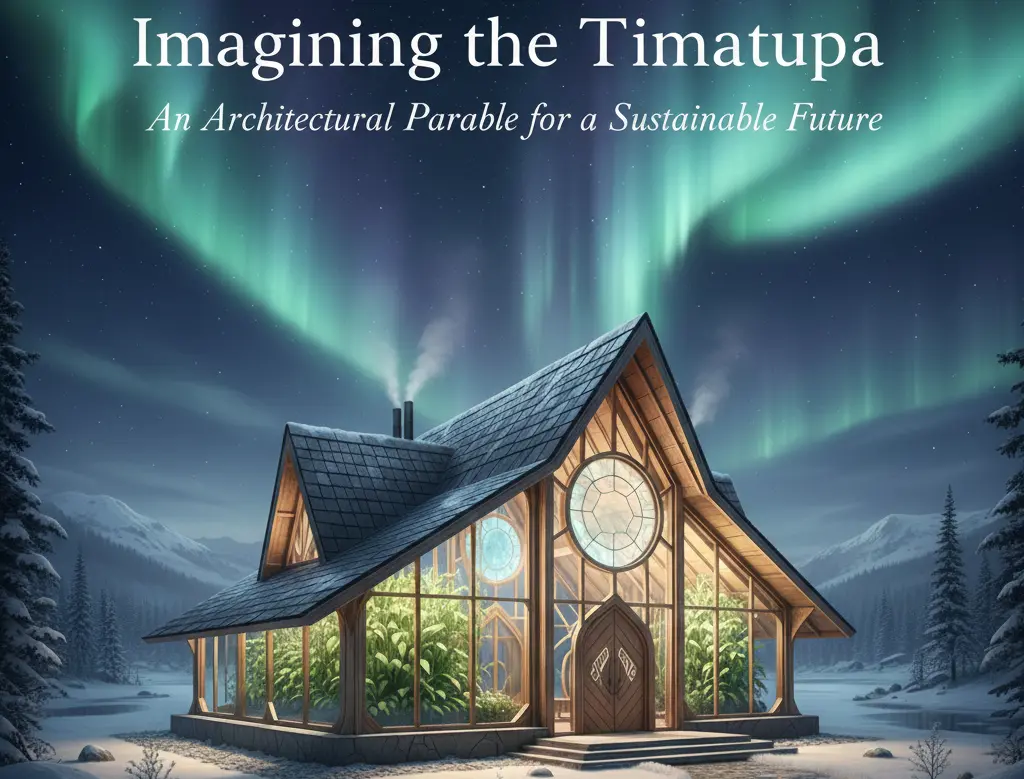
In Finland, where the forest is a national sanctuary and winter darkness demands communal resilience, architecture has evolved to be more than just shelter. It is a dialogue between humanity and nature, a physical expression of cultural values. From this unique context emerges Tiimatuvat, a design philosophy that is not merely a style of building but a multi-faceted approach that merges architecture with sustainability, cultural heritage, and a framework for community innovation. It represents a way of living in harmony with the environment while fostering human connection and progress.
This article serves as a comprehensive overview of Tiimatuvat, exploring its deep Finnish origins, its core principles, and its growing relevance in a world seeking more sustainable and collaborative ways of life. We will delve into what defines this unique approach and how its ideals offer a powerful blueprint for the future.
What Exactly is Tiimatuvat?
Tiimatuvat is best understood as a holistic Finnish architectural and social concept. It is a framework that encompasses the design of physical spaces, a commitment to an environmentally conscious lifestyle, and a structure that encourages team-based innovation. More than just buildings, it is an integrated approach to creating communities that are deeply connected to their natural surroundings and designed to support both individual well-being and collective progress. Drawing from its quiet but significant heritage, Tiimatuvat can be considered a hidden gem of sustainable living, offering a profound alternative to conventional development. In essence, Tiimatuvat designs communities as if they were living ecosystems interdependent, resilient, and deeply rooted in their place.
The Finnish Roots: A Heritage from the Wilderness
The origins of Tiimatuvat are inseparable from its environment. As an architectural heritage of the Finnish wilderness, the philosophy is fundamentally shaped by the sensory experience of Finland’s landscape the particular quality of the low Nordic light, the scent of pine after a rain, the profound silence of a snow-covered forest. This deep, almost spiritual connection to the natural world informs every aspect of its design, from material choice to a building’s orientation toward the sun.
This is not simply about aesthetics; it is about a cultural imperative born from a history of surviving in a beautiful yet demanding landscape. This environment fostered a deep-seated value of interdependence, known in Finnish culture as talkoot, or voluntary communal work. The historical necessity of collective problem-solving is the cultural soil from which Tiimatuvat’s emphasis on team innovation grows. The wilderness did not just shape the buildings; it shaped the collaborative spirit that is now architecturally encoded into modern Tiimatuvat spaces.
The Core Philosophy: Architecture for Nature, People, and Progress
The Tiimatuvat approach is built upon several key pillars that work in concert. It views architecture as a tool to achieve a delicate balance between environmental responsibility, social cohesion, and forward-thinking innovation.
Harmony with Nature: The Architecture of Sustainable Living
At its heart, Tiimatuvat is the architecture of sustainable living. It prioritizes a minimal ecological footprint by designing structures that are in true harmony with their natural setting. This philosophy champions green innovations and environmentally conscious practices, employing principles of biophilic design to create spaces that are not just efficient but also restorative. Every design choice, from leveraging passive house principles for heating to specifying mass timber construction, is weighed against its environmental impact, making sustainability a foundational, non-negotiable principle.
A Space for People: The Architecture of Team Innovation
Beyond its environmental focus, Tiimatuvat is an architecture designed for people to collaborate and innovate together. The design of its spaces is intentionally crafted to foster teamwork and build strong community bonds. These collaborative spaces are not sterile boardrooms. They are often framed with large windows overlooking a shared forest or waterway, a constant reminder of the natural systems the community is sworn to protect. This visual connection to the ‘why’ of their work fuels more creative and grounded innovation, transforming circulation paths into places of interaction and shared areas into dynamic hubs for collective problem-solving.
Key Architectural Features of Tiimatuvat
The principles of Tiimatuvat manifest in several defining architectural characteristics. These features are designed to be both functional and philosophically consistent with its core values.
- Integration with the Landscape: Buildings are carefully sited to blend with the natural topography, often built into a hillside to leverage geothermal insulation or featuring a living roof seeded with native meadow grasses to manage stormwater and support local pollinators.
- Use of Local and Natural Materials: There is a strong preference for sustainably sourced, local materials like slow-growth silver pine, local granite, and rammed earth. These materials not only reduce the carbon footprint but also create a structure that feels native to its location.
- Flexible and Collaborative Spaces: Interior and exterior layouts are designed to be adaptable, promoting community interaction and serving multiple functions. A central courtyard might serve as a social gathering place, an outdoor workshop, and a performance venue, while the sauna remains a key social space for informal connection.
- Emphasis on Environmental Performance: Designs incorporate advanced systems for energy efficiency, water conservation, and waste reduction, moving beyond basic standards to create buildings that actively contribute to the health of the local ecosystem.
How Tiimatuvat Champions Green Innovation
Tiimatuvat serves as a living laboratory for shaping green innovations. This architectural approach moves beyond passive sustainability to actively foster the development and implementation of new environmental technologies. Imagine a community where greywater from residences is filtered through a network of reeds in a central, glass-enclosed atrium—a space that also serves as a communal winter garden and a living ‘lung’ for the buildings. This is not just waste treatment; it’s a visible, beautiful system that educates residents and becomes a focal point of the community’s identity. The community-centric design, with its shared workshops and collaborative ethos, turns residents into co-creators of ecological solutions, creating a closed loop where sustainable living inspires innovation, and that innovation, in turn, enhances the sustainability of the community.
The Modern Cultural Significance of Tiimatuvat
Today, the cultural significance of Tiimatuvat extends far beyond Finland’s borders. In an era marked by climate change and social fragmentation, this holistic philosophy is gaining global attention as a powerful model for future-proof communities. While movements like co-living often focus primarily on social density in urban settings, Tiimatuvat presents a more holistic, nature-centric alternative. It argues that true community resilience is not just social but ecological. By honoring its cultural heritage, Tiimatuvat offers a timeless yet urgent reminder that architecture’s highest purpose is to create systems that support both the planet and its people.
Getting Started: Is the Tiimatuvat Approach for You?
While Tiimatuvat is a distinctly Finnish concept, its core principles are universal. Adopting its mindset is less about replicating a style and more about asking a deeper set of questions at the outset of any project.
- What is the unique ecological story of this specific piece of land, and how can the design honor it? This requires moving beyond a simple site survey to understand the local hydrology, native species, and solar patterns, making the environment a key stakeholder in the design process.
- Where will spontaneous collaboration happen? Consider how circulation paths can become places of interaction, and how shared amenities can be strategically placed to foster a sense of community and collective ownership.
- Beyond energy efficiency, how can this project actively contribute to the local ecosystem? Explore opportunities for creating pollinator habitats, improving downstream water quality, or regenerating soil. The goal is to create architecture that gives back more than it takes.
By embracing these core inquiries—honoring place, designing for community, and pursuing ecological contribution—you can apply the spirit of Tiimatuvat to your own endeavors.
Frequently Asked Questions about Tiimatuvat
What is the primary goal of Tiimatuvat architecture?
The primary goal is to create a holistic living environment that seamlessly integrates sustainable architecture, deep respect for nature, and a social framework that fosters community and team innovation.
Is Tiimatuvat a specific place or a design concept?
Tiimatuvat is a design concept and a philosophical approach to architecture and community building. While it may be implemented in specific places, it is not a single geographic location but a set of principles.
What makes Tiimatuvat different from other sustainable architecture?
Its key differentiator is the synthesis of three core elements: its deep roots in the Finnish wilderness heritage, its explicit focus on designing spaces for team innovation, and its comprehensive approach to creating communities that function as integrated ecological and social systems.
Can Tiimatuvat principles be applied outside of Finland?
Absolutely. The core principles of ecological harmony, community-focused design, and green innovation are universally applicable and can be adapted to different cultural contexts, climates, and landscapes.
Conclusion: The Lasting Blueprint of Tiimatuvat
Tiimatuvat is far more than an architectural trend; it is a coherent and compelling philosophy for living. By weaving together the threads of cultural heritage, environmental stewardship, and human collaboration, it provides a powerful model for creating communities that are not only sustainable but also resilient and innovative. It challenges us to think beyond the physical structure and consider how our built environments can nurture a deeper connection with nature and with each other.
As the world continues to search for better ways to build and live, the principles rooted in the Finnish wilderness offer a lasting blueprint. Tiimatuvat stands as an elegant reminder that the most innovative future is one that learns from the wisdom of the past and builds in harmony with the natural world.