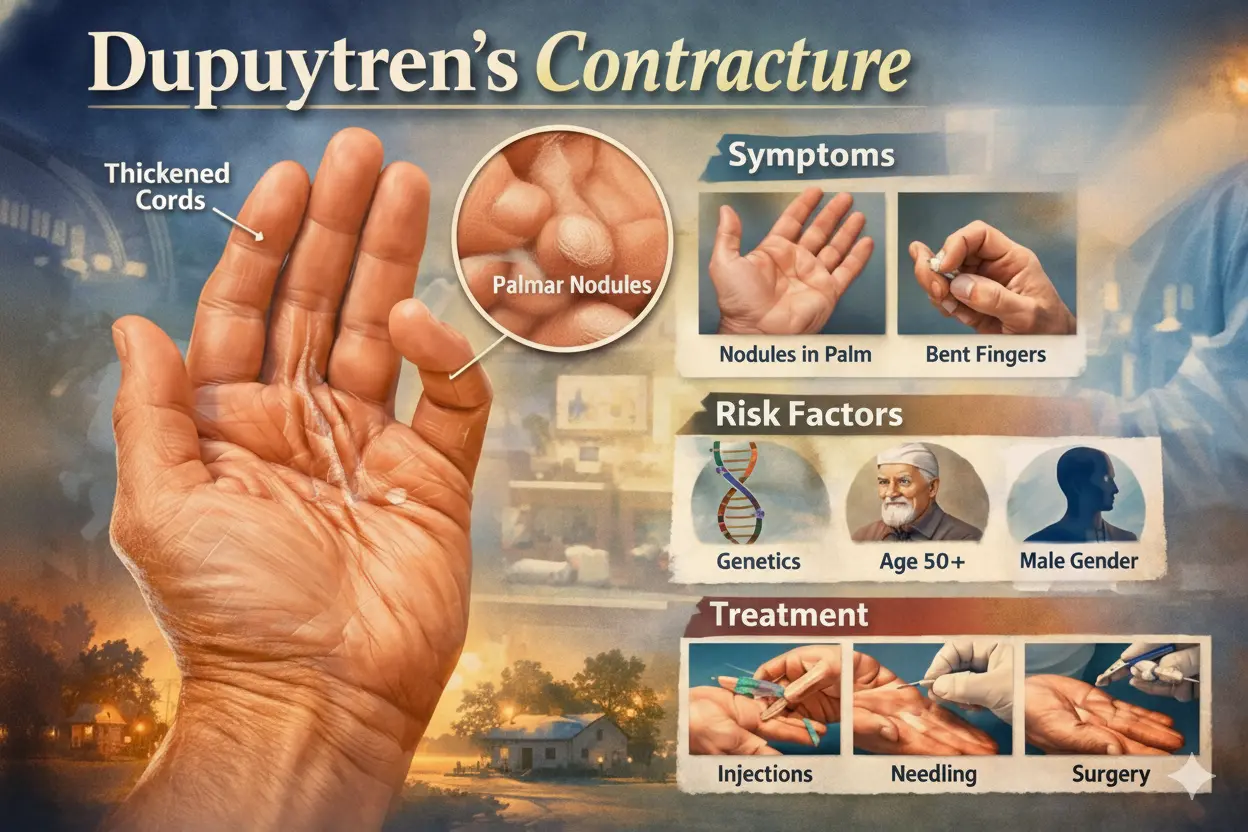
Loguytren problems, medically known as Dupuytren’s contracture, refer to a hand condition that slowly affects finger movement over time. The problem begins in the palm, where the connective tissue under the skin starts to thicken. As this tissue tightens, it forms bands that gradually pull one or more fingers toward the palm. Straightening the hand becomes difficult, even though pain is usually minimal or absent.
This condition most often involves the ring finger and little finger. In the early stages, many people ignore the symptoms because they do not interfere much with daily life. However, as the tightening progresses, tasks like gripping objects, shaking hands, typing, or placing the hand flat on a surface may become difficult.
Dupuytren’s contracture is not a problem of the bones or joints. Instead, it affects the fascia, a layer of tissue beneath the skin of the palm. Although it does not threaten life, it can significantly affect hand function and independence if it advances.
Why Loguytren Problems Develop
The exact reason why Dupuytren’s contracture develops is still not fully understood. Medical research suggests that abnormal collagen production in the palmar fascia causes the tissue to thicken and shorten. Over time, this excess collagen forms cords that tighten and pull the fingers inward.
What makes one person develop this condition while another does not is still unclear. However, doctors have identified several factors that increase the likelihood of developing Loguytren problems.
Who Is More Likely to Get Dupuytren’s Contracture?
Certain groups of people face a higher risk of developing this condition.
People with a family history of Dupuytren’s contracture are more likely to notice similar changes in their hands. Age also plays an important role, as symptoms usually appear after the age of 40 and become more noticeable with time. Men are affected far more often than women and tend to experience faster progression.
Ethnic background is another factor. The condition is more common among individuals of Northern European origin, particularly those with roots in Scandinavia, the UK, or Ireland. Lifestyle and health conditions such as diabetes, smoking, heavy alcohol use, and epilepsy have also been linked to a higher risk.
In some cases, Dupuytren’s contracture appears alongside similar tissue conditions affecting other parts of the body, such as the feet or genital area.
Common Symptoms of Loguytren Problems
Loguytren problems usually develop slowly, sometimes over several years. Early signs are often subtle and easy to dismiss.
At first, small firm lumps may appear in the palm. These nodules are usually painless but can feel hard under the skin. Over time, the skin may feel tight or less flexible in that area.
As the condition progresses, rope-like cords form under the skin and extend toward the fingers. These cords gradually shorten, pulling the fingers inward. Eventually, one or more fingers may stay bent and resist straightening, even when pressure is applied.
When Should You Seek Medical Advice?
Medical attention is advised if finger movement becomes limited or daily activities start feeling difficult. Being unable to place the hand flat on a table or struggling with routine tasks like holding a phone, buttoning clothes, or gripping tools are common reasons people seek treatment.
Early evaluation helps track progression and discuss suitable treatment options before severe stiffness develops.
How Loguytren Problems Are Diagnosed
Diagnosis is mainly based on a physical examination. A doctor examines the palm and fingers to identify nodules, cords, and finger contractures. One common assessment involves asking the patient to place their hand flat on a surface to check flexibility.
Imaging tests are rarely required unless another condition needs to be ruled out. In most cases, the visible and physical signs are enough to confirm Dupuytren’s contracture.
Treatment Options for Loguytren Problems
Treatment depends on how advanced the condition is and how much it affects daily life. Not everyone requires immediate intervention.
In mild cases where finger movement is still good, doctors may suggest observation and regular monitoring. When movement becomes limited, non-surgical treatments are often considered first. These include enzyme injections that weaken the tightened cords, allowing the fingers to be straightened, or needle-based procedures that release the tension in the tissue.
For more advanced cases, surgery may be required to remove or release the affected tissue. Surgical treatment can significantly improve finger movement, but recovery takes time and follow-up care is important.
Managing Daily Life With Dupuytren’s Contracture
Living with Loguytren problems requires awareness and regular hand care. Gentle stretching and hand exercises may help maintain flexibility, although they do not stop the condition entirely. Avoiding excessive strain on the hands and managing related health conditions can also be helpful.
Some individuals benefit from physical therapy after treatment to regain movement and strength. Regular follow-ups allow early detection of changes or recurrence.
Long-Term Outlook and Possible Complications
Dupuytren’s contracture often progresses slowly, but it does tend to return even after treatment. Many people experience recurrence within a few years, especially if the condition is severe or runs in the family.
Possible complications from treatment include stiffness, scarring, nerve irritation, or infection, particularly after surgery. Without treatment, finger bending usually increases over time, reducing hand function.
That said, many people live for years with mild symptoms and never need surgery.
Frequently Asked Questions About Loguytren Problems
Is Dupuytren’s contracture inherited?
Family history increases risk, but not everyone with affected relatives develops the condition.
Does the condition cause pain?
Pain is uncommon. Most discomfort comes from restricted movement rather than soreness.
Can Loguytren problems be prevented?
There is no proven prevention, but managing diabetes, avoiding smoking, and limiting alcohol may help reduce risk.
Do exercises cure Dupuytren’s contracture?
Exercises help with mobility but do not reverse tissue thickening.
Final Thoughts
Loguytren problems, or Dupuytren’s contracture, are a common hand condition that gradually limits finger movement. While the exact cause remains uncertain, early recognition and timely care can make a meaningful difference. With proper monitoring and the right treatment approach, many people maintain hand function and independence for years. If you notice persistent lumps or finger stiffness, consulting a specialist early can help guide the best course of action.